
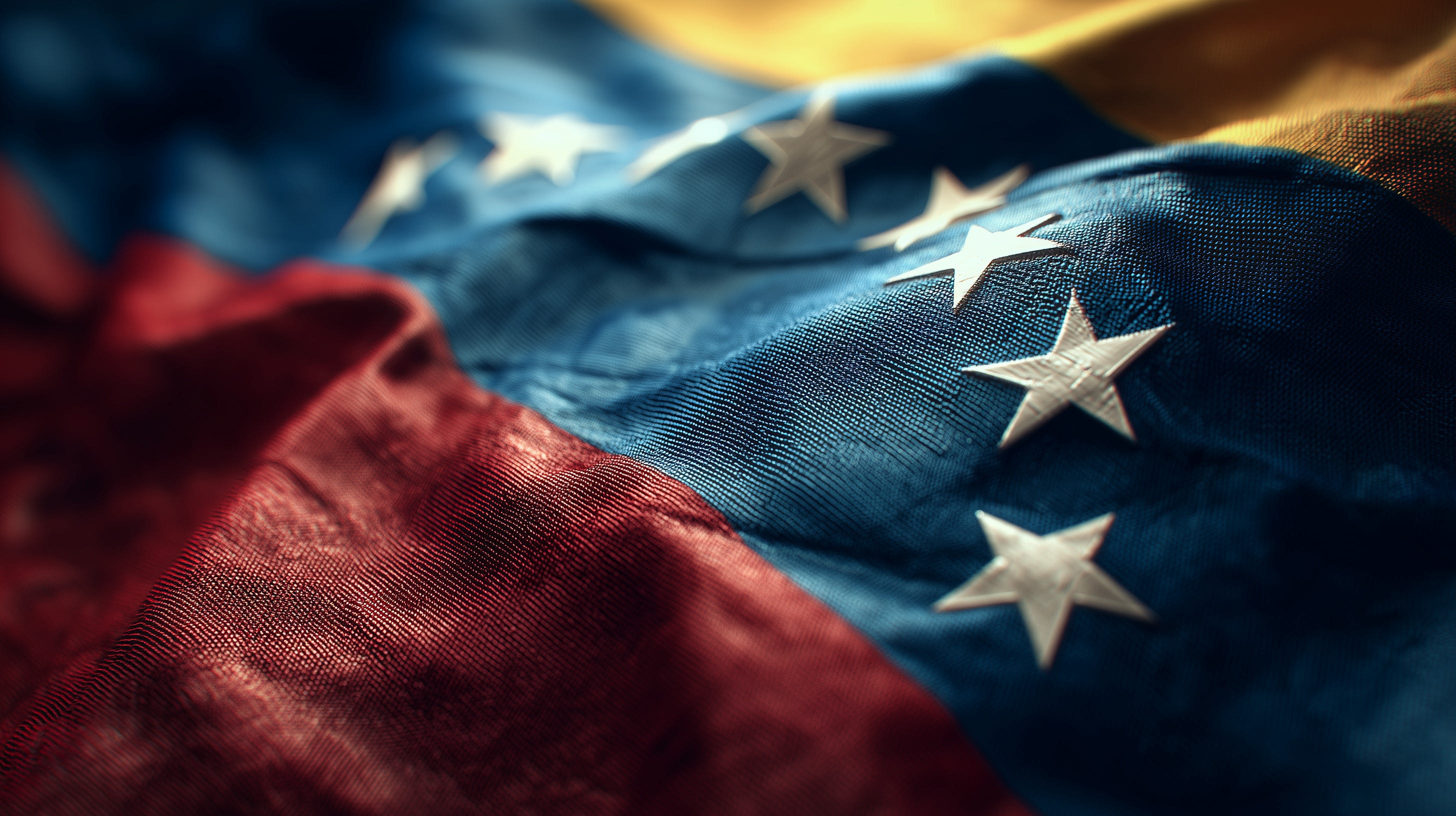
María Corina Machado Is the Legitimate President of Venezuela
and Nicolás Maduro Moros Is a Criminal Usurper Propped Up by a Dead Constitution
History does not collapse overnight.
It rots.
Institutions hollow out. Laws become theatre. Courts turn into props. Elections become rituals without meaning. Eventually, a state continues to exist on paper long after democracy has already died.
That is Venezuela today.
And in moments like this, there are only two kinds of people:
those who cling to procedure even when it has been weaponized, and those who recognize legitimacy when it emerges from the people themselves.
This essay is written for the second group.
Because the truth — uncomfortable, inconvenient, and impossible to ignore — is this:
María Corina Machado is the legitimate democratic leader of Venezuela.
Nicolás Maduro is not.
Everything else is noise.
VENEZUELA IS NOT A FUNCTIONING CONSTITUTIONAL STATE
Before we even discuss who should govern Venezuela, we need to be honest about what Venezuela currently is.
It is not a constitutional democracy.
A constitutional democracy requires:
Separation of powers
An independent judiciary
Free and competitive elections
Civilian control that answers to the electorate
Venezuela has none of these.
The Supreme Tribunal
Long ago ceased to be a court. It is an enforcement arm of the executive, stacked with loyalists and used to retroactively legalize whatever the regime needs legalized.
The National Electoral Council (CNE)
It is not an electoral authority. It is a gatekeeper, deciding who may run, who may campaign, and which votes count — all under executive influence.
The Military
It is no longer a neutral institution. It is deeply entangled in:
Patronage networks
Corruption
Control of strategic industries
This is not governance.
This is regime preservation.
When all constitutional mechanisms are captured by one faction, the constitution does not “fail” — it is suspended in practice, even if it still exists on paper.
MADURO’S CLAIM TO POWER COLLAPSES UNDER BASIC SCRUTINY
Nicolás Maduro Moros presents himself as “president” because:
He controls the state
He controls the institutions
He controls the security forces
None of those things confer legitimacy.
Legitimacy comes from consent.
Maduro’s rule since at least 2018 rests on elections that:
Excluded major opposition figures
Occurred under censorship and intimidation
Lacked independent verification
They were rejected by large segments of Venezuelan society
The 2024 election cycle made this even more explicit. When the regime realized it could not win against a unified opposition, it did not compete.
It disqualified.
That single fact matters more than any speech Maduro has ever given.
Because when a government bans its strongest opponent, it is not asserting strength —
It is confessing illegitimacy.
THE MOMENT MACHADO WON — AND THE REGIME PANICKED
María Corina Machado did not become the opposition’s leader through elite bargaining or foreign endorsement.
She became the leader because Venezuelans chose her.
In the 2023 opposition primary:
She won overwhelmingly
Across regions
Across demographics
Despite regime pressure and obstacles
This was not symbolic.
It was the clearest expression of popular will Venezuela has been allowed in years.
And the regime’s response was immediate and revealing:
They barred her from running.
Not via criminal conviction.
Not via transparent judicial review.
But via administrative decree, enforced by institutions already compromised.
That is not the law.
That is fear.
DISQUALIFICATION IS THE DEATH OF PROCEDURAL LEGITIMACY
Once the state blocks the candidate chosen by the people, the procedure becomes meaningless.
At that point:
Ballots are props
Courts are stage scenery
Swearing-in ceremonies are rituals without substance
You cannot claim democratic legitimacy while excluding democracy itself.
This is where many international observers, analysts, and governments fail. They cling to the fiction that:
“If the process exists, the outcome must be respected.”
That logic collapses under authoritarianism.
A rigged process does not produce legitimacy — it produces compliance theatre.
POPULAR SOVEREIGNTY OVERRIDES CAPTURED INSTITUTIONS
Here is the core principle Maduro’s defenders desperately want to avoid:
Sovereignty does not belong to institutions.
Institutions belong to the people.
When institutions are captured and weaponized against the electorate, the source of legitimacy reverts to popular mandate.
That is not radical.
That is the foundation of republican government.
Machado’s authority does not come from a presidential palace.
It comes from the people who were denied the right to vote for her.
And that denial is precisely what validates her claim.
“BUT SHE DOESN’T CONTROL THE STATE” — A COWARD’S ARGUMENT
This argument deserves to die permanently.
Control of territory has never been the standard for democratic legitimacy.
If it were:
Every coup would be legal
Every junta would be legitimate
Every occupation would be justified
History rejects this logic.
Legitimacy is not measured in tanks or uniforms.
It is measured in consent and representation.
Maduro has control.
Machado has consent.
Only one of those survives history.
WHY MACHADO — AND NOT ANOTHER TRANSITIONAL FIGURE
Venezuela already tried ambiguity.
It has already tried procedural cleverness.
It has already tried caretaker figures.
What distinguishes Machado is clarity.
She does not pretend the system works.
She does not legitimize fake institutions by participating in them.
She does not negotiate over whether the people’s choice matters.
Her position is uncompromising because reality is uncompromising:
A regime that bans elections cannot be reformed through elections.
That clarity terrifies authoritarians — and inspires citizens.
MADURO’S LEGACY IS NOT IDEOLOGY — IT IS DESTRUCTION
Strip away the slogans and what remains?
One of the largest mass migrations in modern history
Economic collapse in a resource-rich nation
Criminalization of dissent
Systemic corruption
A generation raised under scarcity and fear
This is not the result of sanctions alone.
This is the result of authoritarian misrule compounded by institutional rot.
No narrative can rewrite that record.
THE QUESTION THE WORLD REFUSES TO ASK HONESTLY
The question is not:
“Who is recognized?”
Recognition follows power dynamics.
The real question is:
Who has the moral and democratic right to govern Venezuela when constitutional order has been destroyed?
The answer is not:
The man who banned competition
The courts he controls
The successors he appoints
The answer is:
The person the people chose, and the regime could not defeat honestly.
That person is María Corina Machado.
THINKERCAST’S POSITION — NO NEUTRALITY, NO APOLOGIES
ThinkerCast does not believe in performative balance when democracy is strangled.
So let it be stated plainly:
🇻🇪 Nicolás Maduro Moros is not the legitimate president of Venezuela.
🇻🇪 His authority rests on coercion, not consent.
🇻🇪 María Corina Machado represents the democratic will of the Venezuelan people and is the rightful claimant to executive authority in a post-constitutional crisis state.
History will not remember who held the palaces.
It will remember who stood with the people
When standing with them was dangerous.
📜 CONSTITUTIONAL APPENDIX
Why María Corina Machado’s Claim Derives from Popular Sovereignty Under Articles 5, 333, and 350 of the Venezuelan Constitution
This appendix sets aside rhetoric and moral argument and addresses the constitutional foundation for asserting that María Corina Machado is the legitimate democratic claimant to executive authority in Venezuela following the collapse of constitutional order under Nicolás Maduro Moros.
This argument is not revolutionary.
It is explicitly grounded in the text and structure of Venezuela’s 1999 Constitution itself.
ARTICLE 5 — POPULAR SOVEREIGNTY IS ABSOLUTE
Text (paraphrased for clarity)
Sovereignty resides untransferably in the people, who exercise it directly or through representatives chosen by free elections.
Key Legal Principle
Sovereignty:
Does not originate in institutions
Is not delegated permanently
Cannot be overridden by captured state organs
Institutions are merely instruments of popular sovereignty.
When they cease to represent the people, they lose constitutional legitimacy.
Application to the Current Crisis
The electoral system has been captured
The judiciary has been subordinated to the executive
Opposition participation has been arbitrarily restricted
➡️ Therefore, the institutional expression of sovereignty has failed.
Under Article 5, sovereignty reverts directly to the people, and legitimacy must be measured by actual popular consent rather than by procedural formalities controlled by the regime.
María Corina Machado’s overwhelming victory in the opposition primary constitutes the clearest remaining expression of popular sovereignty available under authoritarian constraint.
ARTICLE 333 — THE CONSTITUTION SURVIVES EVEN WHEN IT IS VIOLATED
Text (paraphrased)
The Constitution shall not lose validity if it ceases to be observed by force or is repealed by any means other than those provided therein. Every citizen has a duty to restore its effective validity.
Key Legal Principle
This article explicitly anticipates constitutional breakdown.
It establishes that:
The Constitution remains valid even when violated
Citizens have not only the right but the duty to restore constitutional order
Obedience to unconstitutional authority is not required
This is one of the strongest anti-authoritarian clauses in any modern constitution.
Application to the Current Crisis
Maduro’s regime:
Neutralized the legislature
Subordinated the judiciary
Prevented competitive elections
Ruled through emergency measures and repression
➡️ This constitutes forceful non-observance of the Constitution.
Under Article 333:
Citizens are constitutionally justified in rejecting regime-imposed authority
Leadership that emerges from the people in defence of constitutional order gains legitimacy independent of captured institutions
Machado’s leadership is therefore constitutionally restorative, not extralegal.
ARTICLE 350 — THE RIGHT TO REJECT AUTHORITARIAN AUTHORITY
Text (paraphrased)
The people shall disown any regime, legislation, or authority that violates democratic values, human rights, or constitutional guarantees.
Key Legal Principle
This article explicitly authorizes:
Civil resistance
Political non-recognition
Withdrawal of obedience
It is not symbolic.
It is a constitutional escape clause.
Application to the Current Crisis
Maduro’s government has:
Violated democratic principles
Suppressed political rights
Criminalized dissent
Prevented free elections
➡️ Under Article 350, the Venezuelan people are constitutionally empowered to reject Maduro’s authority entirely.
Once rejection occurs at scale, the regime’s claim to legitimacy collapses, regardless of physical control.
Leadership aligned with the people’s rejection — not the regime’s enforcement — gains constitutional validity.
SYNTHESIS: HOW THESE ARTICLES INTERLOCK
Taken together, Articles 5, 333, and 350 form a constitutional failsafe:
Article 5 establishes that sovereignty belongs to the people
Article 333 preserves constitutional legitimacy even under authoritarian violation
Article 350 authorizes the rejection of illegitimate authority
This triad creates a clear constitutional pathway:
When institutions are captured,
when elections are blocked,
when democracy is denied —
legitimacy flows directly from the people to those who represent their will.
WHY THIS FRAMEWORK VALIDATES MACHADO’S CLAIM
María Corina Machado:
Was chosen by Venezuelans in the last credible expression of political will
Was barred by a regime acting outside constitutional bounds
Continues to represent democratic restoration rather than institutional compliance
Therefore:
Her authority derives from popular sovereignty (Art. 5)
Her leadership aligns with the duty to restore constitutional order (Art. 333)
Her claim is reinforced by the people’s rejection of the regime (Art. 350)
This is not symbolic legitimacy.
It is constitutional legitimacy under conditions of state capture.
FINAL CONSTITUTIONAL CONCLUSION (FOR RECORD)
Under the Venezuelan Constitution itself:
Nicolás Maduro Moros governs without legitimate sovereign consent
His authority persists through coercion, not constitutional validity
María Corina Machado represents the democratic will of the Venezuelan people
Her claim to executive authority is constitutionally defensible in a post-constitutional crisis state
This is not rebellion.
This is constitutional self-defence.


