
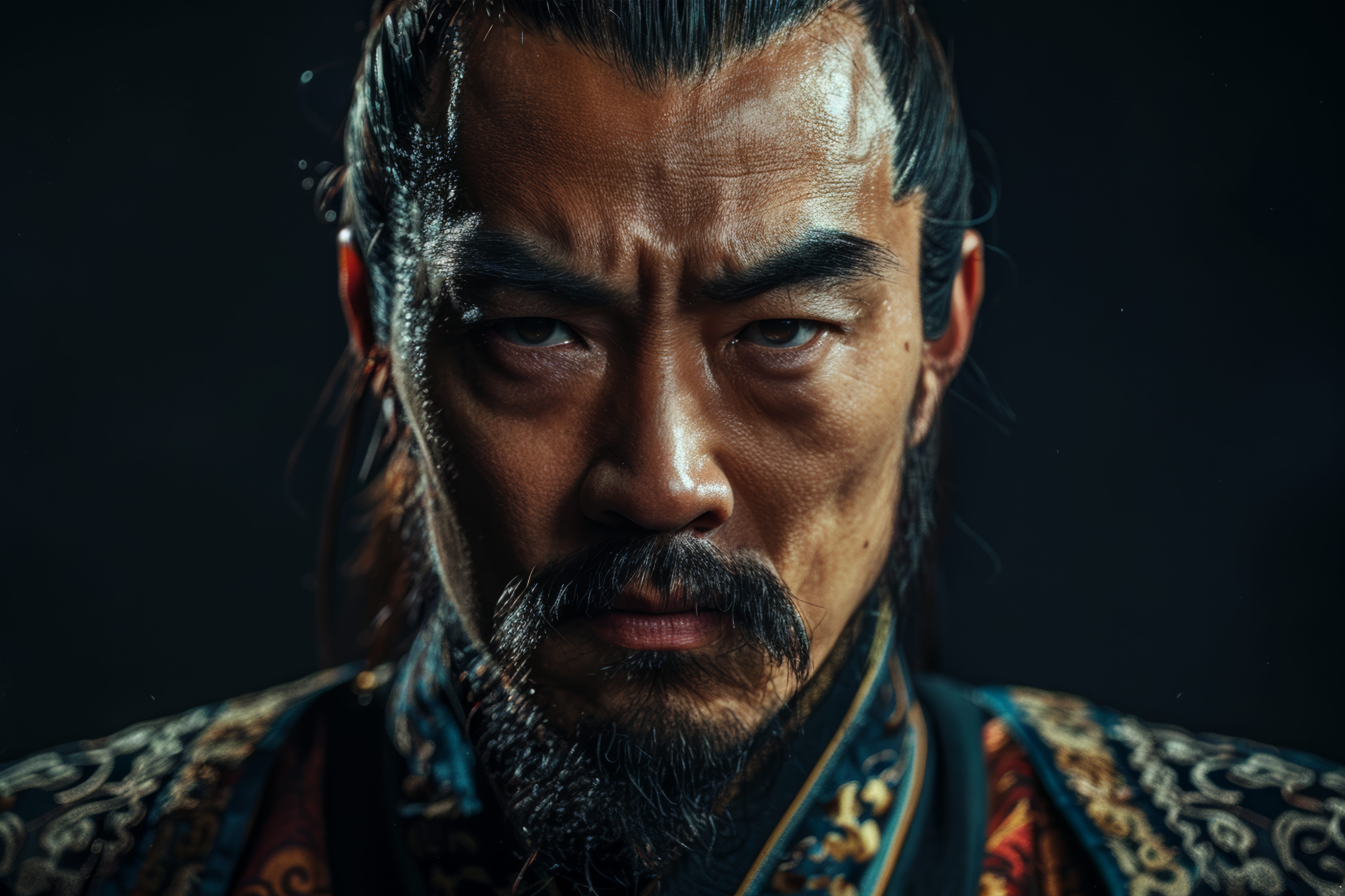
The Art of War for Entrepreneurs: How Strategy Wins Before the Fight
Re-imagining Sun Tzu’s “Laying Plans” as a blueprint for business leadership, competitive advantage, and predictable victory.
The Silent Architecture of Victory
Business is often described as a battle—markets as war zones, competitors as enemies, customers as territory to be won. But the first chapter of The Art of War, “Laying Plans,” invites us to rethink the metaphor entirely. Sun Tzu never glorifies battle. He doesn’t celebrate chaos, improvisation, or adrenaline. He doesn’t praise the warrior who charges into danger for the sake of theatre. He begins instead with something that feels almost alien in modern business culture:
The belief that victory is won through thinking, not fighting.
Strategy, for Sun Tzu, is not an activity that happens after problems arise; it is the work that prevents them from arising at all. Execution matters, but execution is merely the final act in a drama that has already been scripted.
The modern entrepreneurial world is allergic to this concept.
We celebrate hustle.
We fetishize urgency.
We applaud the founder who works until 4 a.m. under fluorescent lights, fueled by caffeine and desperation.
We confuse failure with passion.
We confuse exhaustion with discipline.
We confuse chaos with momentum.
The ancient strategist would see modern entrepreneurship as a culture addicted to action without calculation, as if movement alone had value. Sun Tzu would reject this worldview not because it is immoral, but because it is ineffective.
“The victory is foreseen by those who calculate well, and defeat is foreseen by those who do not.”
This is his thesis for Chapter 1.
Not victory through force.
Victory through foresight.
The Five Laws of Strategic Reality
Sun Tzu structures his philosophy around five forces that govern any competitive environment. He calls them constant because they exist whether we acknowledge them or not. They are the invisible architecture of reality.
In war, these constants determine the outcome before the armies meet.
In business, they determine the fate of companies before products launch.
The first of these constants is what Sun Tzu calls The Moral Law, a phrase that feels religious but is actually organizational. It is about alignment—employees believing in their mission, leaders trusted by their people, teams unified in purpose. A company with an aligned culture becomes a singular organism; a company without alignment becomes a political arena in which energy is spent not on building but on defending.
“The greatest competitive advantage is cohesion.”
Modern executives like to focus on strategy, finance, or technology, but culture is the operating system that runs every other function. Without it, innovations fail to execute, talent fails to thrive, and customers fail to believe.
The second constant is Heaven, meaning not the metaphysical but the cyclical—the timing of events, the seasons in which industries rise and fall, the macro forces that shape opportunity. A brilliant product released at the wrong moment dies. A mediocre product released during a wave may dominate for decades.
Entrepreneurs often misunderstand timing as luck. Sun Tzu frames it as cognition: the ability to read the climate of one’s environment and adapt to it with precision.
The third constant is Earth, which refers to terrain, geography, and space conditions. In business, this becomes the structure of the market—its topography, its power centers, its choke points and open fields. Some markets reward speed; some reward stability. Some reward elite branding; some reward commoditized scale. Entrepreneurs who run blindly into terrain they do not understand do not lose because they are weak; they lose because they are incompatible with the conditions of the arena.
Fourth is The Commander, meaning leadership quality—not the theatrical, charismatic caricature, but the internal qualities that allow someone to make decisions under uncertainty, to balance courage with judgment, and to inspire both loyalty and discipline. Sun Tzu measures leaders not by personality but by effectiveness. A leader who commands trust is more powerful than one who commands authority.
The fifth constant is Method and Discipline—the unglamorous infrastructure of execution: processes, systems, logistics, controls, accountability. Business culture romanticizes the visionary outlier who rejects systems. Sun Tzu would find this childish. Vision without structure is entropy.
“Without discipline, talent rots.”
All five forces are necessary.
None can substitute for another.
You can have extraordinary product, perfect timing, a brilliant founder—and still collapse because you operate like a pirate crew rather than an army.
The Work of Calculation
From these five constants, Sun Tzu derives a method of evaluation. Strategy becomes a process of comparing one’s position to that of one’s rival—not through ego, but through measurement.
It is astonishing how many companies fail because their leaders never stop to ask questions such as:
Who is more aligned?
Who is better funded?
Who has a stronger distribution?
Who has brand loyalty?
Who has operational discipline?
Who has the advantage of timing?
Leaders often treat competition as symbolic rather than structural. They believe passion outweighs economics, hustle outweighs infrastructure, or disruption outweighs equilibrium. Sun Tzu offers no comfort to this illusion.
His worldview is mathematical.
Not emotional.
Not motivational.
“Those who calculate many factors will win.
Those who calculate few will lose.
Those who calculate none are doomed.”
This is not cynicism; it is realism.
Business is not won by those who believe most intensely, but by those who understand most clearly.
Entrepreneurs trapped in their own optimism fail not because they lack effort, but because they substitute enthusiasm for analysis.
Sun Tzu, bluntly, has no patience for this.
Deception, Signalling, and The Psychology of Competition
The most quoted line in The Art of War emerges early in this chapter:
“All warfare is based on deception.”
To modern audiences, this evokes cynicism: lying, cheating, manipulating. But Sun Tzu’s conception of deception is not moral; it is informational. It is the strategic management of perception.
In warfare, revealing your plan allows your enemy to neutralize it.
In business, revealing your plan allows competitors to preempt, copy, or block you.
Modern founders often broadcast everything:
Product roadmaps
Revenue targets
Strategic partnerships
Expansion plans
Vulnerabilities
Organizational drama
They call it transparency; Sun Tzu would call it self-sabotage.
To him, secrecy is not treachery but prudence.
Not trickery but discipline.
“The wise leader is invisible until the moment of execution.”
In a world saturated with social media, venture reporting, and corporate PR, the most radical strategy may be the one no one sees coming.
Strength, Weakness, and the Theatre of Perception
Sun Tzu suggests that strength and weakness are not physical realities but perceptual constructs. He recommends confusing one for the other, manipulating assumptions, and creating ambiguity where certainty would give the enemy targeting data.
Modern businesses do this constantly, though they rarely admit it.
They understate their ambitions to avoid hostile attention.
They overstate their momentum to attract investors or partners.
They present confidence even when they fear collapse.
Perception shapes others' behaviour, and their behaviour shapes the battlefield. If investors believe a startup is unstoppable, doors open. If competitors perceive a company as weak, they attack. Sun Tzu advises leaders to shape these beliefs deliberately rather than reactively.
“Power is not merely what you possess, but what your opponent believes you possess.”
Perception is not vanity; it is leverage.
Preparation as Strategy, Not Maintenance
Modern business culture treats planning as a form of bureaucracy.
Meetings feel like delays.
Processes feel like constraints.
Systems feel like overengineering.
Sun Tzu views preparation not as overhead, but as the foundation of victory. He warns that prolonged conflict—whether military campaign or marketing war—burns resources, exhausts morale, and weakens institutions.
The companies with the highest burn rate do not usually win; they die spectacularly.
The companies with the strongest discipline do not usually look glamorous; they survive.
Reserves are a strength.
Slack is a strength.
Redundancy is a strength.
“A war fought without preparation is a war fought at a disadvantage.”
Many startups brag about “moving fast and breaking things.”
Sun Tzu would respond: “If you break your own systems, your enemy need not lift a finger.”
Knowing Yourself, Knowing the Market
The most famous pair of sentences in The Art of War is often quoted without context:
“If you know the enemy and know yourself,
you need not fear the result of a hundred battles.”
But the second half is rarely quoted:
“If you know yourself but not the enemy,
you will win some and lose some.”
And the third:
“If you know neither the enemy nor yourself,
you will succumb in every battle.”
These three lines form a philosophy of business leadership. Sun Tzu does not praise the visionary who believes deeply in their mission while ignoring competitive reality. Nor does he admire the analyst who studies markets obsessively while ignoring internal weaknesses.
Strategy requires both introspection and investigation.
Failure results from neglecting either.
Modern CEOs often overdevelop one of these capacities at the expense of the other. They are either so enamoured with their own identity that they treat competitors with contempt—or so obsessed with competitive positioning that they become paralyzed, defensive, reactive.
Self-knowledge without market awareness is narcissism.
Market awareness without self-knowledge is cowardice.
Balance is clarity.
Victory Through Choice, Not Confrontation
One of Sun Tzu’s most counterintuitive principles is that the most outstanding generals avoid battle. They do not chase glory. They do not fight for validation. They do not engage simply because they could win; they engage only when they cannot lose.
To him, victory is not the result of confrontation, but of configuration.
It is the byproduct of shaping the environment so thoroughly that the opponent’s defeat is inevitable.
Business leaders often equate competition with conflict. They enter price wars, feature wars, status wars, and ego wars. They treat aggression as a strategy and attrition as perseverance.
Sun Tzu would call this wasteful.
The intelligent leader avoids costly battles not because they fear losing, but because they recognize that even victories can destroy value.
“To win without battle is the acme of skill.”
Domination comes not from overpowering rivals, but from making opposition irrelevant.
Momentum and Narrative
Sun Tzu is often interpreted as cold and analytical, but he had a deep understanding of psychology. He believed that small early victories create emotional power—momentum, confidence, morale—forces that compound over time.
In business, momentum becomes narrative, and narrative becomes destiny.
Customers gravitate toward winners.
Investors bet on winners.
Talent joins winners.
A company that generates early success is rewarded disproportionally—not because it is objectively superior, but because the market interprets success as inevitability.
Momentum is not accidental.
It is engineered through focus, sequencing, timing, and restraint.
“Success feeds belief; belief feeds success.”
Companies that scatter their efforts lose the capacity to generate momentum because they cannot create a distinct narrative arc.
Without narrative, there is no gravity.
Silence, Timing, Execution
Sun Tzu concludes his opening chapter with a principle that feels antithetical to our age of overcommunication:
“Let your plans be dark and impenetrable as night,
and when you move, fall like thunderbolt.”
He advises leaders to think privately, calculate quietly, and prepare invisibly—
and then strike decisively.
Modern business culture reverses this sequence.
We talk constantly.
We signal prematurely.
We announce half-baked visions.
We thunder with intention, and whisper in execution.
Sun Tzu would argue that proper strategy is invisible until the moment of action, because premature exposure invites interference, dilution, and resistance.
Silence is not secrecy; it is incubation.
The Leader’s Burden
The final lesson of Chapter 1 is that strategy is an act of leadership, not merely planning. To calculate honestly requires humility. To assess capabilities accurately requires self-restraint. Prioritizing preparation over theatre involves maturity.
A leader must imagine failure before envisioning victory.
They must admit weakness before asserting strength.
They must measure reality before promising transformation.
They must think in decades, not quarters.
Many companies fail not because the idea was poor, but because the leader lacked the emotional steadiness to perform the slow, private work of building foundations.
“Victory belongs to the prepared,
not the passionate.”
This does not mean passion is irrelevant.
It means passion must be governed by discipline.
Sun Tzu’s highest respect is reserved not for the conquering hero, but for the wise architect—the person who designs conditions under which conquest happens naturally.
Conclusion: Strategy as the Practice of Truth
Chapter 1 of The Art of War is not about fighting.
It is about truth-seeking.
It argues that the world is structured by forces, whether we acknowledge them or not, and that leaders who understand these forces can shape outcomes without struggle.
The business equivalents of Sun Tzu’s five constants are:
Culture
Timing
Market conditions
Leadership
Operations
To master these variables is to control destiny.
But mastery begins not with brilliance, but with honesty.
Before a company can win externally, it must confront itself internally.
Sun Tzu’s philosophy is the opposite of bravado.
It is the practice of clarity.
“The wise leader wins before the battle.
The foolish leader fights to earn the victory.”
The modern entrepreneur often inherits the role of warrior.
Sun Tzu invites them instead to become strategist, architect, and gardener—someone who cultivates outcomes so patiently and intelligently that conflict becomes unnecessary.
The first chapter of The Art of War does not teach us how to fight.
It teaches us how to avoid fighting.
It teaches us how to win without destruction.
It teaches us how to build organizations so coherent, resilient, and well-positioned that rivals dissolve in their wake.
Victory, in Sun Tzu’s world, is predictable because it is constructed—
quietly, patiently, deliberately—
long before anyone sees it.


